Ditch the toxins and plastic! Make your own mascara
Hey there, lovely friends!
Happy Summer 2026 ! As I sit here thinking about all my goals for the rest of this year, one thing keeps coming back to me – my commitment to living a more minimalist, sustainable, and budget-friendly lifestyle. You know how it is, right? We often get caught up in the convenience of ready-made products, but as I get older, I’ve been learning to pause and think about what I’m actually putting on my body.
That’s when it hit me – if I’m trying to consume less and live more intentionally, I should probably pay attention to the stuff I’m putting ON my body too, right? Especially my mascara! I mean, we’re talking about something that goes literally right up against our eyes every single day.
DIY Mascara: My Lash-Saving Journey
Therefore, I set out on a mission to find a better way – and guess what? I discovered something amazing: making your own mascara is not only totally doable, but it’s actually BETTER for you, your lashes, our furry friends, and our beautiful planet!
Think about it:
- Your wallet will thank you (DIY mascara is SO much cheaper!)
- Your lashes will love you (no more harsh chemicals!)
- The environment will breathe easier (bye-bye, plastic waste!)
- Our animal friends will celebrate with you (no more animal testing!)
- You’ll feel amazing knowing exactly what’s in your beauty products
Let me tell you a little story – as I’ve gotten older, I’ve noticed something not-so-fun happening: my once-lush lashes have started feeling a bit… well, sparse! At first, I just blamed it on aging (which there’s no escaping, let’s be honest!), thyroid, perimenopause, malabsorption, and so on, but then I started thinking about all the products I’d been using over the years. All the microplastics, chemicals, and synthetics stuff.
As an ethical vegan, this was the final straw for me – I just couldn’t justify using products that might have been tested on innocent animals. We are so much better than that! And once I saw how easy it is to make, and how much better it is, and how great it looks (honestly, better than the commercial ones!), I couldn’t go back.
So today, I’m sharing my simple, effective, and totally natural recipe that has become my go-to beauty secret. It’s not only easy enough for complete beginners, but it actually works AND it keeps my lashes healthy while making them look absolutely gorgeous. Plus, if you’re feeling adventurous, you can even tweak it to create beautiful brown or maroon shades!
Ready to ditch the toxins and embrace the fabulous? Let’s dive in!
Why Make Your Own Mascara?
Making your own mascara might seem like a small act, but its impact ripples outward—touching your health, your wallet, and the world around you. Here’s why this simple switch matters:
- Avoid Harsh Chemicals: Commercial mascaras often contain preservatives (like parabens), colorants (like carbon black), and synthetic polymers that can irritate eyes and may have long-term health concerns. When you make it yourself, you know every ingredient that touches your delicate lash line.
- Save Money: A single bottle of vegetable glycerin or a bag of activated charcoal can make dozens of batches. The initial investment in ingredients pays off quickly, saving you from the recurring cost of store-bought tubes.
- Reduce Plastic Waste: The beauty industry generates billions of plastic packages annually, most of which aren’t recycled. By reusing an old tube or a small glass jar, you keep plastic out of landfills and oceans.
- Customize for Your Needs: Have sensitive eyes? Omit an essential oil. Want a nourishing boost? Add a drop of castor oil. You are in complete control, creating a product that’s perfectly suited to you.
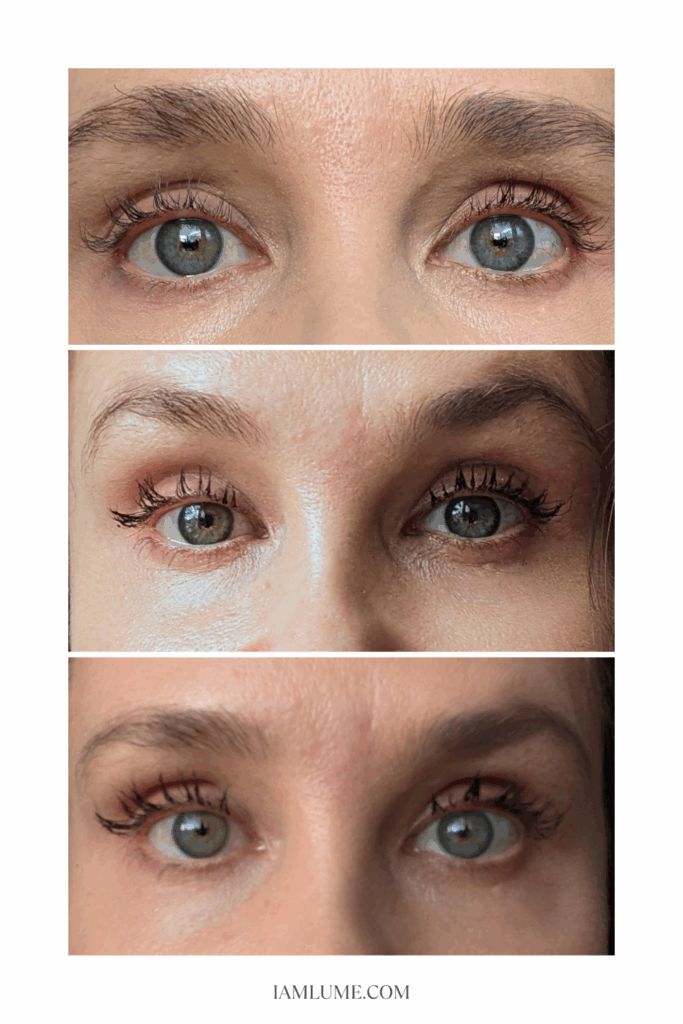
here are the before and after pictures
First picture on the top has no mascara, the middle has one application, and the bottom picture has two applications.
Benefits of These Natural Ingredients
Each component in these recipes was chosen for a specific purpose, blending efficacy with care:
- Activated Charcoal or Cocoa Powder: Provides rich, dark pigmentation. Charcoal also has mild absorbent properties.
- Bentonite Clay: Acts as a natural thickener and helps the formula adhere smoothly to lashes.
- Vegetable Glycerin: A humectant that draws moisture to the lashes, preventing dryness and brittleness.
- Shea Butter & Coconut Oil: Deeply moisturizing and nourishing, they condition lashes and promote a healthy appearance.
- Carnauba Wax: A plant-based wax that gives the mascara structure and staying power without being overly stiff.
- Aloe Vera Gel: Soothes the skin, adds a smooth texture, and contains vitamins that support skin and hair health.
Shelf Life & Storage Tips
Because these recipes are preservative-free, their shelf life is shorter than commercial products.
- How Long It Lasts: Homemade mascara is best used within 1 to 2 months. To extend its life, store it in the refrigerator, where it can last up to 3-4 months. Always check for any changes in smell or texture before use.
- Best Storage Practices: Keep your mascara in a cool, dark place (or the fridge). Never double-dip a used wand into the container, as this introduces bacteria. Use a clean spoolie or disposable wand each time, or thoroughly wash your wand before re-dipping.
How to Clean & Reuse Mascara Tubes Thoroughly
Giving an old tube a new life is a deeply satisfying, eco-friendly step. Here’s how to do it safely:
- Remove Old Product: Use a small spatula or the end of a paperclip to scrape out as much old mascara as possible.
- Disassemble: Pull out the wand and the inner stopper (if possible) using tweezers.
- Soak & Scrub: Place all parts in a bowl of hot water with a drop of dish soap. Let them soak for an hour. Use a small brush (like a clean eyebrow or detail brush) and cotton swabs to scrub the inside of the tube and clean the wand and stopper.
- Sanitize: For a final sanitizing step, submerge the parts in rubbing alcohol (isopropyl alcohol) for 10-15 minutes. Rinse thoroughly with hot water and let everything air-dry completely on a clean paper towel.
- Eco-Friendly Alternatives: If you don’t have an old tube, consider purchasing a reusable aluminum mascara tube or a small glass jar with a tight seal from zero-waste suppliers.
Testing & Patch Safety: A Crucial Step!
Always perform a patch test before using any new product near your eyes. Apply a small amount of the mascara to the skin on your inner arm or behind your ear. Wait 24-48 hours to check for any redness, itching, or irritation. Remember, natural doesn’t automatically mean safe for everyone. You could have a sensitivity to an ingredient like clay or aloe. It’s always better to be safe.
Tints & Customizations
- For a Brown Mascara: Substitute the activated charcoal with cocoa powder for a soft brown or cinnamon for a warmer auburn tone (patch test cinnamon carefully!).
- For Extra Nourishment: Add 1-2 drops of argan oil (for shine and strength) or rosehip oil (rich in vitamins) to the melting mixture.
- For Lash Growth: A single drop of cold-pressed castor oil is a renowned lash conditioner. Add it to the mix or apply it as a treatment on bare lashes at night.
Where to Buy Ingredients Sustainably
Look for bulk and low-waste options to make your project even greener:
- Check local refill stores or co-ops for oils, glycerin, and clays.
- Purchase from online retailers that allow you to buy in bulk with reduced plastic or through programs like TerraCycle.
Here are some online stores I like:
Tips for Zero-Waste Shopping:
- Choose suppliers that offer bulk options to reduce packaging waste
- Look for companies that use glass jars, metal tins, or compostable packaging
- Consider suppliers that offer refill programs
- Check if they use ethically sourced ingredients
- Small Etsy sellers often accommodate “no plastic packaging” requests
FAQ Section
Is this mascara waterproof?
No, this is a washable mascara. It will withstand normal wear but may smudge if you cry, sweat heavily, or rub your eyes. For me, the trade-off for a non-toxic, nourishing formula is worth the need for a little care. Plus, even many commercial mascaras smudge!
Will it smudge?
It can if it comes into contact with moisture or friction. The solution is simple: carry a few makeup remover wipes or a damp cloth in your bag. A quick, gentle cleanup and reapplication is easy.
How long does it last on lashes?
Perfectly applied and left untouched, it will last beautifully throughout your day.
Can I use this every day?
Absolutely! The gentle, nutrient-rich ingredients make this mascara suitable for daily use. In fact, your lashes may become healthier over time because you’re conditioning them with every application and avoiding harsh chemical removers.
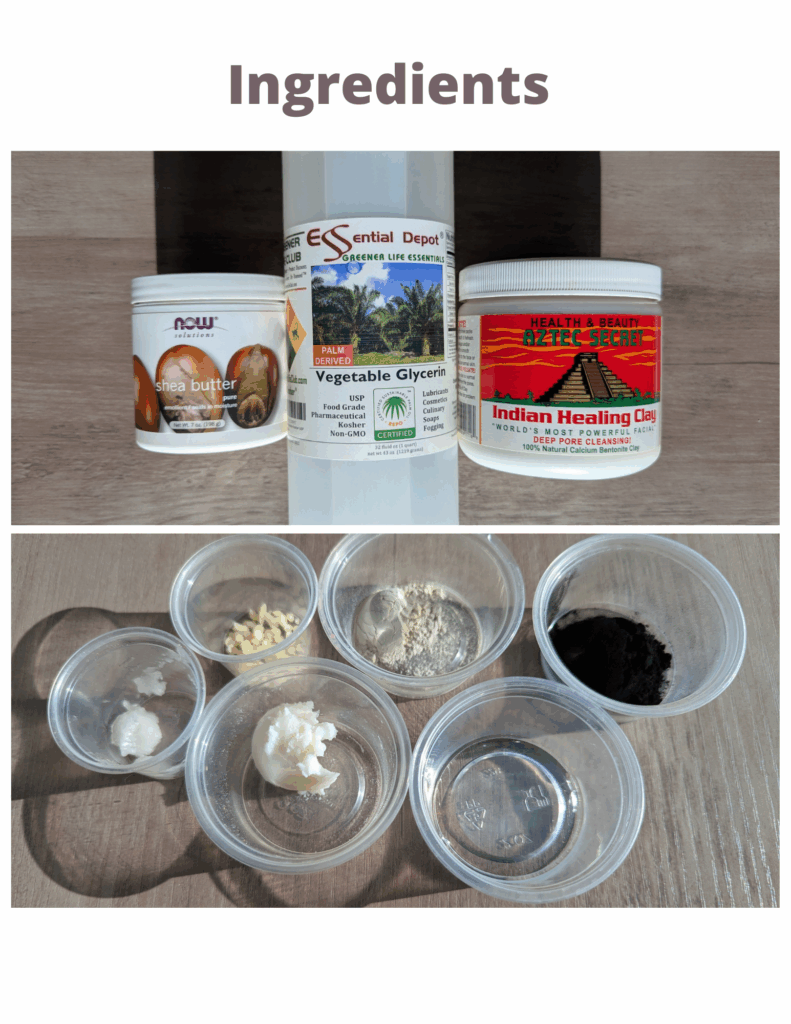
Homemade Natural Mascara
The ingredients in this recipe not only works, but are hydrating for your lashes. If you desire a maroon or brown mascara you can substitute the activated charcoal for cocoa powder.
- saucepan
- glass bowls
- measuring spoons
- spoon
- 1 teaspoon activated charcoal (or cocoa powder for a brown mascara)
- ½ teaspoon bentonite clay powder
- 1 teaspoon vegetable glycerin
- 1 teaspoon shea butter
- ¼ teaspoon carnauba wax
- ¼ teaspoon extra virgin coconut oil
- Create a double boiler (bain-marie): Add an inch of water to a small saucepan and bring it to a gentle simmer over medium heat.
- In a heatproof glass or stainless steel bowl, combine the carnauba wax, shea butter, coconut oil, and vegetable glycerin. Place the bowl over the simmering water, ensuring the bottom does not touch the water.
- Stir gently until all ingredients are completely melted and blended.
- Remove the bowl from heat. Carefully whisk in the bentonite clay until smooth, then whisk in the activated charcoal (or cocoa powder) until no clumps remain and the color is uniform.
- Let the mixture cool slightly until it thickens to a syrup-like consistency (about 5-10 minutes). Transfer it to a clean syringe (without a needle) or a small piping bag.
- Slowly fill your cleaned, empty mascara tube. Alternatively, pour the mixture into a small, airtight container for storage.
Bonus recipes!
Aloe Vera Mascara
If you’re looking for an even lighter, gel-based formula that’s incredibly soothing, this is your recipe. It harnesses the healing power of aloe vera, making it a fantastic choice for sensitive eyes or for giving your lashes a refreshing treat.
Ingredients:
- 1/2 tablespoon extra virgin coconut oil
- 1 tablespoon pure aloe vera gel (store-bought or fresh from the leaf)
- 3 capsules activated charcoal (or 1/2 teaspoon powder)
- 1/4 teaspoon bentonite clay (optional, for extra adherence)
You Will Need:
- A small glass or stainless steel bowl
- A small whisk, fork, or spoon for mixing
- Your cleaned mascara tube or a small airtight container
Instructions:
- Use a small spoon or syringe to transfer your fresh mascara into its container.
- In your small bowl, combine the coconut oil and aloe vera gel. If your coconut oil is solid, gently warm the bowl by placing it in a larger bowl of hot water for a minute until the oil softens.
- Whisk or stir vigorously until the mixture is smooth and fully blended.
- Carefully open the activated charcoal capsules and pour the powder into the bowl (or add the 1/2 teaspoon of powder). Add the bentonite clay now, if using.
- Mix thoroughly until you achieve a smooth, jet-black, lump-free paste. The consistency will be similar to a thin gel liner.
DIY eyeliner
You can also make an eyeliner using only two ingredients! This recipe couldn’t be easier, and more affordable. You can store the eyeliner in a small container, and apply it with a thin brush you can buy online. This recipe makes 2 tablespoons, so if you don’t use eyeliners often substitute the tablespoon for teaspoons.
- 1 tablespoon activated charcoal
- 1 tablespoon coconut oil
I hope you feel inspired to try this simple, intentional act of making. It’s a small gesture of care – for yourself, for animals, and for our shared home. Let me know in the comments if you try it!
With love and lighter living,
Lu
P.S. If you’re making the switch to more homemade products, what would you like to learn to make next? Let me know!
Recycled Reads Worth Another Look

Welcome to my blog! Here I share my love for crafts, refashion, yarns, sewing and DIY. I hope you can learn something and get inspired.
In beauty,
Lu
♥